Introdução
A Apple apresentou os seus processadores M1 Pro/Max nos MacBook Pros de 2021. Como é que estes novos SoC internos alteram o restante silício da placa lógica? Confira este guia de identificação de chips para descobrir!
Tiramos o chapéu ao membro da nossa comunidade C. Chin pela sua contribuição para isto!
-
-
-
Identificação de CI, pte 1:
-
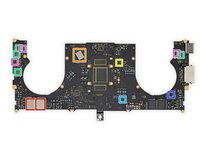
Sistema em um chip (SoC) Apple APL1103 M1 Pro
-
Memória SDRAM LPDDR5 de 8 GB Samsung K3LKYKY0EM-ZGCP (16 GB no total)
-
Memória Flash NAND de 128 GB Kioxia KICM225UZ0460
-
Gerenciamento de energia Apple APL1098/343S00515
-
Gerenciamento de energia Apple 338S00600
-
Conversor de DisplayPort para HDMI Kinetic Technologies MCDP2920
-
Controlador de leitor de cartão Genesys Logic GL9755A
 Pergunte ao FixBot
-
-
-
Identificação do CI, pt. 2:
-
Intel JHL8040R Thunderbolt 4 Retimer
-
Macronix MX25U6472F Memória Flash Serial NOR de 64 Mb
-
Winbond W25Q80DVUXIE Memória Flash Serial NOR de 8 Mb
-
Renesas RAA225701C ? Conversor step down síncrono
-
Analog Devices LT86422 Conversor step down síncrono
-
Texas Instruments TPS62130B Conversor step down
-
Texas Instruments TPS62180 Conversor buck síncrono de 6 A
-
-
-
Identificação de CI, pte. 3:
-
Proteção contra surtos Texas Instruments TVS2200
-
Chave de carga ON Semiconductor FPF2495CUCX
-
Chave de carga Texas Instruments (provavelmente)
-
Regulador LDO de 250 mA / 5,0 V ON Semiconductor NCV8160AMX500TBG
-
Tradutor/Transceptor de nível de tensão de bit duplo Nexperia 74AVC2T45
-
Transceptor de barramento de bit único Texas Instruments SN74AXC1T45
-
Buffer único Nexperia 74AUP1G07
-
-
-
Identificação de CI, pt. 4:
-
Tradutor de nível multivoltagem de 2 canais LSF0102 da Texas Instruments
-
Tradutor de nível multivoltagem de 1 bit LSF0101 da Nexperia
-
Buffer duplo SN74AUP2G07 da Texas Instruments
-
Buffer único SN74LVC1G07 da Texas Instruments
-
Schmitt Trigger 74AUP1G17 da Nexperia
-
Porta AND única 74AUP1G08 da Nexperia
-
-
-
Identificação de CI, pt. 1:
-
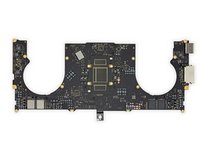
Memória flash NAND Kioxia KICM225VF9081 de 128 GB
-
Módulo Bluetooth/Wi-Fi USI 339S00912
-
Controlador NFC NXP Semiconductor SN210V com Secure Element (o chip Secure Element)
-
Controlador de porta/fornecimento de energia USB Type-C Texas Instruments CD3217B12
-
Carregador de bateria de íons de lítio Renesas ISL9240
-
Memória flash NOR serial Winbond W25Q80EWUXIE de 8 Mb
-
Memória flash NOR serial Winbond W25Q80DVUXIE de 8 Mb
-
-
-
-
Identificação de CI, pt. 2:
-
Controlador PWM de fase de alimentação Renesas
-
Codec de áudio Cirrus Logic CS42L84A
-
Amplificador de áudio Texas Instruments SN012776B0
-
Conversor redutor Texas Instruments TPS62130B
-
Regulador de impulso Renesas RAA209100 (provavelmente)
-
Driver de LED de retroiluminação Texas Instruments LP8548B1
-
Repetidor duplo USB 2.0 Texas Instruments TUSB2E22 (provavelmente)
-
-
-
Identificação de CI, pt. 3:
-
Amplificador de detecção de corrente Texas Instruments INA190A3
-
Amplificador de detecção de corrente Texas Instruments INA190A4
-
Amplificador operacional de entrada/saída rail-to-rail de 1,5 MHz Maxim Integrated MAX9620
-
Amplificador operacional único ON Semiconductor NCS333ASQ3T2G
-
Matriz de sinal misto Dialog Semiconductor (provavelmente)
-
Expansor de E/S de 16 bits NXP Semiconductor PCAL6416A
-
Chave analógica SPST dupla Analog Devices ADG1422BCPZ
-
-
-
Identificação de CI, pt. 4:
-
Texas Instruments REF3325 Referência de tensão de 2,5 V
-
Texas Instruments TLV75801P Regulador LDO de 500 mA / ajustável
-
Texas Instruments TLV75533P Regulador LDO de 500 mA / 3,3 V
-
Texas Instruments LP5907SNX-3.0 Regulador LDO de 250 mA / 3,0 V
-
ON Semiconductor NCP163BMX180TBG Regulador LDO de 250 mA / 1,8 V (provavelmente)
-
Texas Instruments TLV70733P Regulador LDO de 200 mA / 3,3 V
-
Texas Instruments TPS7A201825 Regulador LDO de 200 mA / 1,825 V
-
-
-
Identificação de CI, pt. 5:
-
Transceptor conversor de 4 bits 74AVC4T774 da Nexperia
-
Transceptor conversor 74AUP1T45 da Nexperia
-
Conversor de nível multitensão de 2 canais LSF0102 da Texas Instruments
-
Conversor de nível multitensão de bit único LSF0101 da Nexperia
-
Transceptor/conversor de nível de tensão de bit duplo 74AVC2T45 da Nexperia
-
Conversor de nível de tensão de bit único SN74AUP1T34 da Texas Instruments
-
Transceptor de barramento de bit único SN74AXC1T45 da Texas Instruments
-
-
-
Identificação de CI, pt. 6:
-
Buffer 74AXP1T34 da Nexperia
-
Buffer duplo 74AUP2G07 da Nexperia
-
Buffer único SN74LVC1G07 da Texas Instruments
-
Schmitt Trigger 74AUP1G17 da Nexperia
-
Porta OR dupla 74LVC2G32 da Nexperia
-
Porta OR única SN74AUP1G32 da Texas Instruments
-
Protetor de porta USB tipo C TPD4S311A da Texas Instruments
-
-
-
Identificação de CI, Sensores:
-
Acelerômetro/Giroscópio MEMS de 6 eixos Bosch Sensortec BMI282
-
-
-
Identificação de CI:
-
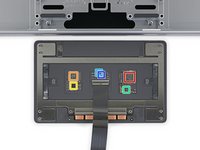
Microcontrolador de 32 bits ARM Cortex-M4 STM32L4P5QG da STMicroelectronics com 1 MB de Flash
-
Controlador de touchpad BCM5976C1 da Broadcom
-
Conversor analógico-digital (A/D) MAX11390A da Maxim Integrated (provável)
-
Regulador de corrente de ponte H de 5 A MP6519 da Monolithic Power Systems
-
Monitor de suprimento de tensão de 1,67 V TPS3831G18 da Texas Instruments
-
Chave de carga TPS22915 da Texas Instruments
-
-
-
Identificação de CI, Sensores:
-
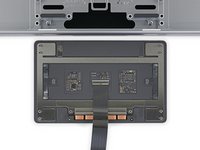
Acelerômetro de 3 eixos Bosch Sensortec BMA282
-
Sensor de temperatura Texas Instruments TMP461
-
-





10Comentários do guia
Why so many LDO regulators? Aren't they very inefficient?
In practise, the efficiency of an LDO regulator is dependent on how much voltage it is dropping. While operating, an LDO is effectively a resistor that varies in real-time to ensure its output voltage stays stable despite changes in load current.
Power = I (current) x V (voltage)
Since an LDO is a resistive element, yes, it burns off energy as heat in this process. So an LDO dropping 18V to 5V could be very inefficient, more so when driving a higher current load as shown by the formula above. However, if an LDO is used to generate a 3.3V rail from a 5V rail, it is dropping just 1.7V, resulting in less power dissipation for the same load current.
You’re right, using an LDO for a large voltage drop is not good electrical design. But LDOs have excellent noise rejection performance, meaning they can take a noisy rail from a switching buck/boost converter with lots of transient or high-draw components on it, and create a much cleaner rail for lower-current, more sensitive devices. This is what I expect Apple’s doing.
LDOs drop the difference in voltage as heat, yes - hence the voltage difference between input and output determines the efficiency (eg a 3.0v LDO fed by 6.0v is 50% efficient).
In many cases where LDOs are used in designs the amount of lost power is negligible as the current being drawn is so small - simply not worth using a switcher for that rail. Also, LDOs typically have cleaner output so often an LDO is used to isolate an analog subsystem from noise on the main (digital) system rails.
+ some designs will have both a switcher and an LDO for the same power rail and switch to the LDO when the current is very low. Switchers get inefficient at low currents, so having both can improve efficiency.
Will you have MacBook Pro 16" 2021(Apple M1 MAX inside) Chip ID?
